Sunday, 30 October 2011

The Human Centipede II (Full Sequence)

One wonders if “The Human Centipede II (Full Sequence)” was ever intended to be taken seriously; I suppose the same could be said for the first sequence too. You see, this full sequence rendered me confused, in that I was unsure if the rib-tickling moments, of which there are many, were an attempt at dark humour by writer-director Tom Six, or if they were a display of Six’s sheer and utter incompetence as a writer. Thinking about it now, I believe they may have been a mixture of both; Six attempted to create a slightly tongue-in-cheek tone, but was clueless as to how to make this work to the film’s advantage.

“The Human Centipede II” has the same basic, though admittedly imaginative, concept as “The Human Centipede.” This is the concept that some sick, psychotic sicko psycho takes it upon himself to surgically join several kidnapped victims mouth-to-anus, thus creating a human centipede. The difference with this vomit-inducing sequel is that the perpetrator of this twisted surgical experiment is not a surgeon.


The perverted antagonist of this perverted sequel - which is mercifully shot in black-and-white - is called Martin. He is played by Laurence R. Harvey, a British stage actor and performance artist who, and I’m sure he won’t mind me saying this, is a tad odd-looking. With sticky-out ears, a receding hairline, beady little eyes, an ever-sweaty forehead and a belly that probably has its own gravitational orbit, he ain’t exactly Robert Pattinson.

Martin works as a security guard in a parking garage. He lives with his mother, who despises him. He is asthmatic, small in stature and appears to have some form of mental illness. It is revealed, very unsubtly, that Martin was a victim of sexual abuse from his father when he was a boy; this is used as an excuse for his behaviour in the film. Martin has an unhealthy obsession with a certain film; this film, surprise surprise, is “The Human Centipede,” which he watches on a regular basis, sometimes while masturbating with sandpaper wrapped around his penis, sometimes not.


Inspired by the film he loves oh so much, Martin decides he wants his own centipede to play with, and I’m not talking about the kind he keeps inside a glass box in his living room. So, with the aid of a handgun and a crowbar, Martin begins kidnapping those who visit his parking garage and takes all twelve (yes, twelve) of them to an empty warehouse for a little bit of medical experimenting.

I said it once, I’ll say it again: Martin is not a surgeon, nor do I believe he ever will be. While Dr. Heiter from the first film decided to administer anaesthetic while operating on his victims, Martin decides to beat them over the head with his crowbar (which proves to be incredibly ineffective). And when Martin discovers he is incapable of properly slicing up his victims’ buttocks for application onto another victim’s face, he gets out his staple gun and gets to staplin’.


There are three things about “The Human Centipede II (Full Sequence)” that I believe to be genuinely good. The first is Harvey, who gives a strong, chilling performance as our antihero/villain without ever uttering a word. The second is the cinematography by David Meadows; Six also seems to be a decent visual director. And the third… well, I can’t think of a third thing.

It goes without saying that this is a nasty, nasty film, a fact which I believe anyone who goes to see it will be fully aware of. Anyone who thought the first film was tame (which, by comparison, sort of was) will be pleased - scratch that, I’ll say “morbidly satisfied” - by the sheer depravity of the violence in “Human Centipede II.” By that same logic, those who were utterly horrified by the content of the first film will find “Human Centipede II” a traumatic experience and may require the services of a psychologist afterwards.


In this BBFC-cut version (with 32 cuts made), we have the tearing of ligaments, the bashing-in of teeth, the removal of a person’s tongue and a rather interesting use of a funnel. An old lady’s skull is beaten open with a crowbar, a newborn baby’s head is crushed by its mother’s foot and, at one point, explosive diarrhoea splatters across the screen; all I can say is, thank Christ the film isn’t in 3D, or indeed 4D.

I can picture Six sitting at his desk following the success of the first film, furiously jotting down the most sinful, lurid and disgusting things he could possibly think of. I can also picture him then inserting these nauseating thoughts into a screenplay, giving little thought to anything in the script outside of these ideas, other than how to progress the plot towards them.


The funny thing is, this is pretty much what people asked for. I can remember audiences complaining to Six that the first film was too tame for its deeply disturbing premise. They begged for the inevitable sequel to be unforgivably repellent and incessantly stomach-churning, as they expected the first film to be. They asked for it to be more graphic, more gruesome and more vile than the first one; they essentially wanted him to up the ante, as it were. Unfortunately for us, Six listened.

And the result is “The Human Centipede II,” a film stock-full of pathetically laughable dialogue, dodgy acting, a plotline that is surprisingly boring, a climax that is deeply unsatisfying and a hopelessly idiotic script so concerned with being vile and repugnant that that is the only way to describe the film. This film is beyond unpleasant, and I would never be so irresponsible as to recommend it to anyone.

0/10

Wednesday, 26 October 2011

The Adventures of Tintin: The Secret of the Unicorn

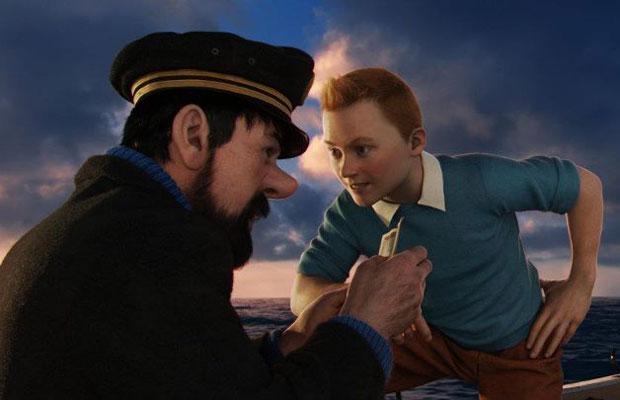
“The Adventures of Tintin: The Secret of the Unicorn” is a master class in visual extravagance which should be attended by any filmmaker intending to create a spectacle; they may learn something. Teaching this master class are legendary director Steven Spielberg and cinematographer Janusz Kaminski, Spielberg’s photographing partner since 1993’s “Schindler’s List.” Together, they create a dizzying thrill-ride so dazzlingly thrilling and a visual spectacle so visually spectacular that it could be described as inspiring; I myself found it endlessly riveting and frequently breathtaking.

As you should know, “Tintin” is based on the classic series of comic books - specifically “The Crab with the Golden Claws,” “The Secret of the Unicorn” and “Red Rackham’s Treasure” - by the Belgian artist known as Hergé. I myself am vaguely familiar with the books; I remember reading a couple of them as a child and enjoying them. As far as I can tell, writers Edgar Wright ("Shaun of the Dead"), Joe Cornish ("Attack the Block") and Steven Moffat ("Doctor Who") do a more than fine job in representing the beloved characters and the adventurous tone set by Hergé.


The film leaps right into the adventure that intrepid, flame-haired boy reporter Tintin (voiced by Jamie Bell, “Billy Elliot”) undergoes with his trusty dog Snowy. The adventure begins with Tintin’s purchase of a model of a legendary ship known as the Unicorn. Upon his purchase, he is almost immediately confronted by two men, one after the other, who wish to buy the model from him. They seem desperate to have it in their possession, though Tintin stubbornly refuses. He wonders: what’s so important about a model ship he just bought for a quid? He must find out!

So, Tintin investigates and soon finds himself locked inside a cage, aboard a freighter, against his will. He discovers that the moustachioed Ivanovich Sakharine (Daniel Craig, “Casino Royale”) is behind his kidnapping; Sakharine reveals that he wants a scroll that Tintin discovered within the model ship, but Tintin doesn‘t have it on him. While aboard the freighter, Tintin meets Captain Archibald Haddock (Andy Serkis, “Rise of the Planet of the Apes”), a bearded drunkard with an obsessive liking for the taste of whisky. They quickly form a friendship. And together, the unlikely duo bravely set out to stop Sakharine’s villainous schemes and solve the mystery they’re both now heavily involved in.


“Tintin” is the very definition of a no-holds-barred, action-packed extravaganza; it’s a spectacle and is not ashamed to say so. One could call it pure entertainment; it exists with the sole intention to provide a non-stop barrage of blockbuster thrills, but is smart about this and never patronises its audience. It’s a film that very rarely stops, and when it does it does not last long.

Its structure essentially takes the form of action set-piece after action set-piece, which may sound tiring, but the experience is exhilarating. The action is fast, intricate, thrilling and creative, with a dash of slapstick humour thrown into the mix. It’s all incredibly fun, as all swashbuckling shenanigans should be; it's Spielberg back in old-school "Indiana Jones" mode, which can only be a good thing.


There are two action sequences that stand out from the rest. The first is an epic, swooping, beautifully shot flashback to Haddock’s pirate ancestor, Sir Francis Haddock (also played by Serkis), as he protects his ship from villainous invaders. This imaginatively intercuts with Captain Haddock’s lively and enthusiastic description of the scene. The second is a chase sequence that takes us through the streets of exotic Bagghar. Tintin and Haddock are in hot pursuit of Sakharine, who has just obtained the three scrolls that will lead him to a heap of treasure. The scene, lasting sometime around three minutes, is unadulterated over-the-top action that is, impressively, done without a single cut from start to finish; I know it’s animated, but still, it’s impressive.

The film has latched onto the recent trend of performance capture; this, in case you don’t know, is when the facial and bodily movements of one or more CGI characters within a film are based directly on the facial and bodily movements of a real-life human being. The trend is usually lampooned for creating animated characters who are afflicted with zombie eyes and skin that looks like it is made of wax; “Tintin,” however, does not suffer from this.


You see, “Tintin” actually pushes this technology into truly impressive territory and has me absolutely convinced the medium really could go places. Unlike other performance capture efforts such as the Robert Zemeckis-produced “Mars Needs Moms,” Robert Zemeckis' “The Polar Express” and Robert Zemeckis’ “A Christmas Carol” (you noticing a pattern here?), the medium here is not a friggin’ eyesore, instead creating something that is ridiculously gorgeous and visually pleasing. Along with August’s “Rise of the Planet of the Apes,” the film is the best argument for performance capture I’ve seen since James Cameron’s “Avatar.”

The film is fully animated, so every movement of every single character has been physically carried out by the voice cast. The movements of the characters are smooth, fluid and realistic; their facial expressions are also fully expressive, as opposed to stiff and scary (as they were for the CGI-faced Jeff Bridges in “TRON: Legacy”). Altogether, the character animation is utterly magnificent and is some of the best I’ve seen in a feature film; indeed, there were several moments where I genuinely believed I was watching real-life human beings.


Hergé famously stated that Steven Spielberg was the only director capable of bringing Tintin to the big-screen; turns out he just may have been right. Wonderfully animated, frequently hilarious and boundlessly stimulating, “The Adventures of Tintin: The Secret of the Unicorn” is an invigorating piece of action-packed entertainment that will excite and beguile audiences of all ages. I hope to see more adventures from quiff-head soon

9/10

Sunday, 23 October 2011

The Ides of March

I’ve always thought George Clooney would make for a lovely President of the United States. For one, the American actor has a suave, ridiculously charming and effortlessly cool personality. He gives the impression that he is an intelligent, confident and well-spoken man during interviews and TV appearances. He’s undeniably handsome, having won People Magazine’s “Sexiest Man Alive” twice. He’s a ladies’ man, with flirtation practically his second language.

He’s sexy, though in a way that straight guys can say is sexy without feeling, well, un-straight. His teeth are so white they make Bill Clinton look like 2Pac. Also, wikipedia says he’s done some big important humanitarian and political work a few times or something or other (I skim read the page). Anyway, given these key facts, I reckon if Clooney were to run for the presidency he’d win with his hands tied behind his back; plus, he’d be the first Batman to run for office, though hopefully sans bat-nipples.


In “The Ides of March,” Clooney plays a man who is running for the presidency. This man is Mike Morris, the suave and charming Democratic governor of Pennsylvania. Currently, he is attempting to win over the state of Ohio, competing against rival presidential candidate Ted Pullman (Michael Mantell, “Ocean’s Thirteen”), the Republican senator of Arkansas. Helping Morris in his campaign are senior campaign manager Paul Zara (Philip Seymour Hoffman, “Capote”) and junior campaign manager Stephen Meyers (Ryan Gosling, “Drive”).

While only in the junior position, Stephen is frequently shown to be the real brains behind Morris’ campaign. He understands elections and how they work. He understands how voters’ minds operate and what Morris should say to sway voters either way. He knows what will make people vote for Morris and what will make people not vote for Morris. I may be making him sound sneaky and crafty in a devious way, but he’s not, at least not at the film’s beginning. You see, Stephen genuinely believes Morris to be the best man to sit in the president’s chair and he will do anything within his power to make sure his man wins the election, but a corrupt man he is not.


One day, Stephen is contacted by Senator Pullman’s campaign manager, Tom Duffy (Paul Giamatti, “Sidways”). Duffy reveals he wants Stephen to dump Morris and come help support Pullman’s campaign instead. Stephen is appalled and says no. Soon after, Stephen begins an affair with an intern for Morris’ campaign, Molly Stearns (Evan Rachel Wood, “Thirteen”). This ends in Stephen learning of a scandal that could possibly destroy Morris’ campaign. His opinion of Morris begins to change. He’s not the man Stephen thought he was. But should Stephen remain loyal and stay with Morris, or ditch him and go with Pullman?

“The Ides of March” has a wonderful story that’s fully engaging from the opening scene right up to the chilling closing moments. The story has a superb set of characters who each have their own motivations and sense of purpose. These characters are acted without fault, the film fitted with a cast of well-respected, enormously talented actors. The dialogue, which is sometimes humorous and sometimes emotional, is rich, witty and highly entertaining. All in all, it’s an unqualified success that’s very difficult to falter in any specific area.


The film not only stars Clooney, but is also co-written and directed by the hunky silver-top. It follows his previous directing stints on “Confessions of a Dangerous Mind,” “Good Night, and Good Luck” and “Leatherheads.” Blissfully ignoring that last one, one can see he’s already proven himself to be an exceedingly talented filmmaker as well as a supremely commanding screen presence; “The Ides of March” only serves to further support this reputation.

Clooney, along with fellow writers Grant Heslov (“Good Night, and Good Luck”) and Beau Willimon (writer of the play “Farragut North,” on which the film is based), successfully keeps the story stimulating and intriguing throughout. The story is given much weight through its characters, who are engaging and well-developed. The plotting is sharp, teeming with quick twists and well-timed character moments. At times dramatic, at others sly and comical, it’s a story that is infinitely compelling and handled with care and attention.


Gosling, who’s only recently risen to public attention and become a household name, makes for a fabulous lead alongside slightly more distinguished actors such as Paul Giamatti and Philip Seymour Hoffman (both of whom are as excellent as ever). Gosling convinces as a man who comes face-to-face with a moral dilemma and is forced to question his own loyalty. He’s a committed, ambitious and skillful press secretary who must become corrupt in light of unexpected events; he must lose his innocence and his ideals if he is to survive. The character is not necessarily a sympathetic figure, but instead an endearing character played with much charisma by the talented Mr. Gosling.

“The Ides of March” is not necessarily a thriller, but it feels like one. It’s a political drama that’s overwhelmed by a frequently intense mood while not giving into typical cinematic thrills. It’s a good-looking, splendidly written and marvellously acted drama that goes down well as captivating entertainment. I suppose you could say it’s march-nificent. Look, even I cringed at that.

9/10

Friday, 21 October 2011

Paranormal Activity 3

The thing that I love about the “Paranormal Activity” franchise is its use of tension and build-up. Each instalment, from the 2009 original to this brand new third entry, is absolutely littered with the kind of hair-raising tension that will shred your nerves and cause you to bite your fingernails down to the bone. I love these movies because they throw me, among many others, into a never-ending whirl of terror and suspense; in an age where horror films consist mostly of blood, gore, torture and tits, this series is a revelation.

The build-up that is utilised in each film, all of which are filmed in the found-footage format, is phenomenal; the way in which the villainous entity/demon/ghost/whatever haunts and taunts the petrified protagonists guarantees a suspenseful build-up. The scares are always minimal at first - maybe a few bumps in the night and a gust of wind blowing a door closed - and then slowly but surely build and build into a batshit-insane bundle of horrifying horror and bloodcurdling screams; it’s at this point you begin to question why the character holding the camera is still, well, holding the camera.


“Paranormal Activity 3” uses this formula once again, but please don’t be put off, dear reader, because I assure you there are plenty of surprises stuffed up the filmmakers’ sleeves; also, the two-year-old formula, well-known as it is by now, still proves itself to be very effective in creating a boatload of tension and suspense (with pay-offs too!). Sure, fans of the first two films will be more than aware of the formula’s methods of progression, but the film is not as seen-it-all-before as one may initially suspect.

Like “Paranormal Activity 2,” “PA3” is a prequel, this time predating the first two films’ story by just under twenty years. The film is set in 1988, a fact which is sometimes convincing and sometimes not. Remember sisters Katie and Kristi from the first two films? Well, here they’re little youngsters living with mummy (Lauren Bittner, “Bride Wars”) and daddy (Brian Boland, “The Unborn”) in a lovely suburban home in California.


Kristi is here characterised as a rather shy girl, as opposed to her teasing sister Katie. Kristi is shown to have an imaginary friend named Toby; no, you do not get any reward for predicting that this Toby person is in fact the entity/demon/ghost/whatever haunting the home. This is so obvious (yet cool) that even daddy manages to figure this out in the film’s first half.

So, the family suspect there is an entity/demon/ghost/whatever stalking the hallways of their spacious abode. Well, daddy at least does, and thus he decides to set up cameras all around the house, recording footage with VHS tapes that need to be changed every six hours. There’s one in the kids’ bedroom, one in mummy and daddy’s bedroom, one that’s used for handheld filming about the house, and one that sits on a rotating fan, surveilling the kitchen and living room; the film is, of course, presented entirely through what these cameras manage to capture.


I love that last camera. I love the way it very slowly rotates from the kitchen to the living room, and then very slowly back to the kitchen again, repeat all throughout the day. This allows for nigh-unbearable suspense as we await the camera to rotate and reveal something standing, something moving, something going missing or something popping up out of nowhere; as the camera turns, you are entirely aware that anything could suddenly appear at the side of the frame at any moment. It’s simple, but gosh darn it’s effective.

The film is directed by Henry Joost and Ariel Schulman. You may recognise these names from last year’s controversial documentary “Catfish,” a cautionary tale about the dangers of social networking. The choice of Joost and Schulman as directors of the next instalment in the biggest found-footage franchise in the history of ever is interesting, seeing as to how the two spent months fiercely defending their claims that “Catfish” was a genuine documentary and not a found-footage film.


Anyway, it turns out they were a fabulous choice for the film. Along with Christopher B. Landon, writer of “Paranormal Activity 2,” they muster up a cavalcade of creativity and originality in the scares department. Yes, some scares are easily foreseen (such as the babysitter lunging at the camera for a LOL-tastic gag), but there is an ample heap of shocks and frights to startle, traumatise and create a sort of yellowy-brown stain in the bottom of your underwear; I apologise for the image.

“Paranormal Activity 3,” against all odds, is an unexpectedly glorious success of a horror threequel. As somebody who thoroughly enjoyed “PA1” and “PA2,” I can safely say that “PA3” is at the very least on a par with both of its wonderful predecessors. Different enough to be fresh yet still true to the franchise’s well-established formula, it’s a titillatingly terrifying and furiously creative found-footage chiller that should more than please die-hard fans of the successful series. I would, however, advise the producers to end the series here; the story has been told, leave it at that. We don’t want another over-convoluted “Saw”-esque franchise on our hands here.

9/10

Thursday, 20 October 2011

Contagion

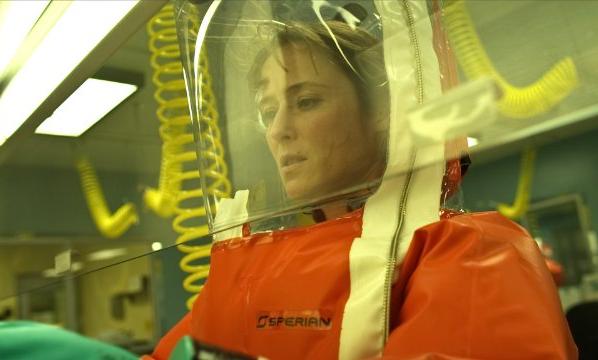
“Contagion” begins with the ominous sound of a person coughing. This person is Beth Emhoff (Gwyneth Paltrow, “Iron Man 2”) and, unbeknownst to her, she is the first known person to carry a newly developed virus that can cause intense headaches, perspiration, seizures and death. By the time Beth has died in hospital as a direct result of the virus, she has already sparked its rapid spread from country to country; soon enough, the virus will consume the globe, infecting and killing millions in the process; this virus is much worse than bird flu, lemme tell you that.

This is director Steven Soderbergh’s ultra-realistic disaster drama-thriller set in the present day. Well, I say ultra-realistic, but I myself am maybe not equipped enough to say so. I’m not a medical doctor nor a professional in dealing with global epidemics, but as far as I could tell the film painted a fairly realistic picture of what would happen if a very lethal and very contagious disease began to spread throughout the world. If not, then it sure fooled me.


As is usual with the disaster genre, “Contagion” carries an ensemble cast of big star names; it has a script that balances them with ease, with no actor getting lost in the ocean of very recognisable A-listers. This is also a result of sublime acting performances, which aid in making the film feel so real and compelling as we watch the story unfold.

Laurence Fishburne (“Predators”) plays Dr. Ellis Cheever, a high-up official of the Centres for Disease Control and Prevention who is tasked with dealing with the virus’ outbreak. He assigns Dr. Erin Mears (Kate Winslet, “Revolutionary Road”) of the Epidemic Intelligence Service to keep track of who is currently infected and thus try to stop the spread.


Marion Cotillard (“Midnight in Paris”) plays Dr. Leonora Orantes, an epidemiologist who travels to Hong Kong to investigate the source of the virus. Jude Law (“Repo Men”) plays Alan Krumwiede, a conspiracy theorist and internet blogger who believes the government is doing very bad, very scandalous things for financial gain; turns out he’s a bit of a hypocrite.

Matt Damon (“The Adjustment Bureau”) plays Mitch Emhoff, husband of the late Beth. He comes home from the hospital to discover his young son has also died from the virus. It turns out Mitch is immune to the virus, but is his daughter, Jory (Anna Jacoby-Heron)? The doctors can’t tell yet. He’s determined to protect her from anyone carrying the virus, or anyone who could be carrying the virus until she can be treated with the yet-undiscovered vaccine. He’s already lost his wife and son, he’s not going to lose his daughter now too.


Damon’s character feels like more of a protagonist than any of the other characters, though he shares an equal amount of screen-time with his co-stars. Perhaps this is because he’s the most human character; all others are government officials questioning and investigating, while Mitch is just a man trying to protect his daughter. He’s a likable and noble man with whom we can fully relate; I mean, the only other main character who is not a government official is played by Jude Law, and he’s a knob.*

Still, the government folks in the film are also made to be relatable. They are shown to be flawed human beings rather than a bunch of soulless bureaucrats in suits. They are people trying to get their job done in extreme circumstances. They are trying to save the world and control a situation that seems to be uncontrollable. The world’s health and sanity is at their fingertips; the world is scared and they too are scared. As a result, their character flaws begin to seep through the surface.


There’s a lot of medical jargon in the film; I suppose this is an inevitability when many of the characters are doctors who must frequently converse about a dangerous virus that’s spreading across the globe. I think I got the gist of what they were saying most of the time, the majority of it consisting of explanations of what the virus consists of, its danger level, where it’s spreading and where it is going to spread. It’s a bit like watching “ER;” you’re often perplexed by the jargon yet still able to follow the basics. Anyway, all we need to know is this: there’s a disease, it’s a bad disease, it’s spreading everywhere and it’s killing everybody up in here.

I can imagine all of this happening in real-life in the way the film portrays it would. I can imagine quarantines being put in place, I can imagine mass panic and violence in the streets and I can imagine the government reacting the way it does in the film. Also, with the average person touching their face three to five times every waking minute (this film taught me that), I can imagine the virus spreading so quickly in such a short space of time. That’s ultimately what I loved about “Contagion:” I believed it and didn’t doubt the story; I could be fully enthralled in the narrative without frequently questioning its realism, which is more than I can say for some films.


“Contagion” works as both a drama and a disaster movie, in fact succeeding very well at both. These elements go hand-in-hand without fault; I suppose disaster always comes with a slice of drama, anyway. It’s a very compelling film that doesn’t resort to mindless thrills for entertainment value. It’s an intelligent disaster flick that’s about emotion as opposed to spectacle; we don’t have enough of those these days.

8/10

*Just kidding, I like Jude Law. Sort of.

Tuesday, 18 October 2011

Don't Be Afraid of the Dark

It’s a rule of horror cinema that the children, as opposed to the customer, are always right. It’s also a rule that the parents of said children, no matter how much the children beg and plead for mummy and/or daddy to believe their story, will not believe a single word they say. “Don’t Be Afraid of the Dark” is a film that incorporates this rule and does so proudly; it may sound like the film’s writers have merely tumbled their way into a tired horror cliché, but using classic horror tropes makes perfect sense in a film that has a rather classic horror story to tell.

The child in this case is ten-year-old Sally Hurst, who is played by the very talented Bailee Madison (“Bridge to Terabithia”). Daddy is Alex, an architect played by man-of-many-accents Guy Pearce (“Animal Kingdom”). And mummy may be heard on occasion but is never seen, though taking her place is Alex’s new girlfriend, Kim, who is played by a surprisingly decent Katie Holmes (“Batman Begins”).


Little Sally is most displeased with her current living situation. She’s been taken from her LA home with mummy and is now living with daddy and daddy’s girlfriend in the spooky and gothic Blackwood Manor on Rhode Island. Alex and Kim are planning on putting the house on the market, so are refurbishing the place for selling purposes.

They soon discover that underneath the grand staircase lies a basement that has been mysteriously hidden away behind a wall. As they are unaware that they are in a horror film, they indulge in their curiosity, and venture into the basement. The place is completely covered in dust and cobwebs. Nobody’s been in here for decades. Sally begins to hear voices. Daddy says it’s just rats. Who do you believe?


Inevitably, spooky goings-on begin to occur in this creepy, creaky house, specifically around poor little Sally. But no matter how much Sally begs and pleads for daddy and daddy’s girlfriend to believe her story, they ignore every word that comes out of her silly little mouth, believing that she has just gone a bit nuts. But there are teeny-tiny fairy gnome creatures living in the basement, you stupid grown-ups, and they want to take poor Sally down to the basement and devour her bones! Do something, damn it!

Yes, the villains of this supernatural horror are teeny-tiny fairy gnome creatures that live in the basement and enjoy chasing innocent little children. Now, these vicious little buggers may not sound very intimidating on paper, but when you’re watching an endless army of the creatures sneaking about the floor, wielding knives and screwdrivers with murder in their eyes you better prepare to be slightly intimidated.


They’re kept in the dark for a fair amount of the film’s runtime, their presence for the first half or so of the film consisting of raspy whispers that attract and enchant poor little Sally. But when these creatures finally emerge from the darkness and show their ugly faces, we are greeted with a marvellous, yet rather simple, design. They’re humanoid, they’re scrawny, their skin is a dead grey, their eyes are beady, their teeth are rotten and they’re a half foot tall. Just imagine the world’s worst rodent and times it by a thousand.

The film is less scary than it is thrilling. Sure, there are plenty of jump-scares to startle one and send flakes of popcorn flying through the air, but the film never truly chills or frightens. Instead, the film benefits from being engaging and intriguing, providing a regular and consistent collection of thrills to keep viewers enthralled throughout. You may think that a horror film that is not frightening is not worthy of your time, but a horror film - and any film in general - need only be entertaining to be a success.


The film is co-written and produced by Guillermo del Toro, a very talented Mexican filmmaker. His influence on the film is noticeable; the creature designs, for one, remind one of the creatures presented in his “Pan’s Labyrinth” and “Hellboy II: The Golden Army.” There’s also the use of a child as the protagonist, much like in del Toro’s “The Devil’s Backbone” and “Pan’s Labyrinth;” the original, made-for-TV “Don’t Be Afraid of the Dark,” of which del Toro is a massive fan, instead had a grown woman (played by Kim Darby) as the protagonist.

“Don’t Be Afraid of the Dark” is director Troy Nixey’s first feature-length film; all in all, it’s an impressive debut. He, along with co-writers del Toro and Matthew Robbins (“Mimic”), successfully build an unnerving atmosphere and stay true to it. While it’s not particularly spine-chilling or scary, the film is a perfectly enjoyable, endlessly compelling and generally solid haunted house horror; okay, okay, infestation horror.

7/10

Real Steel

“Real Steel” is a boxing movie that focuses more on the trainer than it does on the boxer; think “Rocky” focusing on cranky ol’ Mickey rather than the eponymous Italian Stallion. Now, that may sound a bit crap, but with “Real Steel” it’s a plus, given that the boxer is a hunk of junk that can’t talk, emote or really do a whole lot outside of swinging its metallic mitts and taking a heap of hard hits. To be frank, this robotic character is no Wall-E, so it’s a relief the film’s attention is dedicated to the robot’s human trainers rather than the robot itself/himself.

The film is based on Richard Matheson’s short story “Steel,” which already got the live-action treatment with a 1963 episode of “The Twilight Zone.” Director-for-hire Shawn Levy’s big-screen adaptation is set in the near future, when robot boxing has won the world over; yes, sports fans are now less enticed by the intensity of two muscular human beings sweating and panting as they brutally brawl with each other, and are now more concerned with the sight of scraps of metal repeatedly bashing against other scraps of metal. [insert “Transformers” joke here]


Charlie Kenton (Hugh Jackman, “X-Men Origins: Wolverine”), an ex-boxer, is an amateur trainer of these robots, i.e. he controls them as they fight in the ring. He’s had mixed results with this, frequently having to owe money to men who threaten to beat him to a pulp if he doesn’t pay up; he rarely does. He’s that lovable rogue kinda character who’s immature and a bit of an ass, but the audience still roots for him in spite of his hardhearted attitude.

One day, he’s given the news that his ex-girlfriend has died and that the aunt and uncle of his eleven-year-old son Max (Dakota Goyo, “Thor”), whom Charlie abandoned, want full custody of the boy. Uncaring about Max’s future, Charlie signs off full custody to the aunt and uncle, but will have to take care of him until the aunt and uncle return from a three-month trip to Italy.


Soon enough, Max takes an interest in Charlie’s robot-boxing. Together, they find a veteran robot named Atom lying in a junkyard. Max drags Atom to the gym despite Charlie’s insistence not to; Charlie thinks the robot is useless; Max thinks the robot has potential. They power Atom up and discover he has the ability to mimic the actions of humans through sight. They enter him into a non-official fight. Atom is sure to lose. And they watch as Atom beats the nuts and bolts out of his brawny competitor; it turns out the old automaton has quite a bit of fighting fuel left in him.

Inevitably, Atom ends up fighting in the televised official leagues against robotic juggernauts who are much bigger and much stronger than him. There’s a bunch of action, so it’s a good job the film’s biggest asset is its action; the fights between the robotic characters are surprisingly compelling and relentlessly energetic, shot with spacial awareness and visual clarity. They’re sometimes tense, sometimes emotional, but always fun. It turns out Shawn Levy is quite the director of robot fights; maybe the “Transformers 4” gong should be taken off Michael Bay and given to Levy? No, wait, Levy made “Cheaper by the Dozen”…


The robots themselves are designed rather well. They’re big and bulky and heavy and look a little like Transformers (I’ll stop mentioning Transformers). They’ve been animated through use of motion-capture, much like the Na’vi in “Avatar” and the apes in “Rise of the Planet of the Apes;” this is very effective. Atom in particular seems to have been designed not necessarily in a cute way but with the idea of making him appear friendly and appealing; with his small glowing blue eyes, how could you not love him?

However, the film is not just one overblown rock ’em sock ’em robot action spectacle; no no, it’s also a family melodrama. Yes, there’s the drama between the absent father and the abandoned son that acts as the heart of the story. Side note: it seems it’s impossible to take part in combat sports nowadays without having family troubles; first it was “The Fighter,” then it was “Warrior,” now it’s “Real Steel.”


The family drama works perfectly fine; it serves its purpose in making the film feel like something more than just a movie about robots repeatedly thwacking one another in the nuts and bolts. The relationship between the father and the son is convincing as they initially meet, clash and fight, and then bond together over the professional bot-boxing; sure, it’s predictable and wreaks of Menahem Golan’s “Over the Top” (minus the robots), but it works.

“Real Steel” is a fun film and nothing more; it works perfectly fine on those terms. As a piece of audience-pleasing entertainment, it’s a mostly satisfying success that you can like without feeling guilty. It’s cool, it’s fast, it’s exciting, it’s visually pleasing and it’s dramatically adequate. I’d say that’s pretty good going for a film that’s essentially “Robot Wars” on steroids.

7/10